
Why are Solar Panels Blue
why are solar panels blue comes down to the silicon inside them and the thin anti-reflective layers on top. The blue look is mostly an optical effect, not a paint choice, and it is common on many crystalline-silicon panels. In plain English: the panel is busy catching sunlight, and the color is just a side effect of that job.
S7 Solar Team
Why Blue Panels Look the Way They Do
Most blue panels are made from crystalline silicon cells. Silicon naturally reflects some light, but solar manufacturers add anti-reflective coatings and surface texturing so more sunlight enters the cell instead of bouncing away. That process changes how light is seen by your eyes, which is why the panel often appears blue.
The blue tone is not added just for looks. It happens because certain wavelengths of light reflect off the cell surface while others are absorbed. The result is the familiar blue shade that many homeowners notice from the street, the driveway, or the neighbor who keeps asking if the roof is “working yet.”
Polycrystalline vs. Monocrystalline Appearance
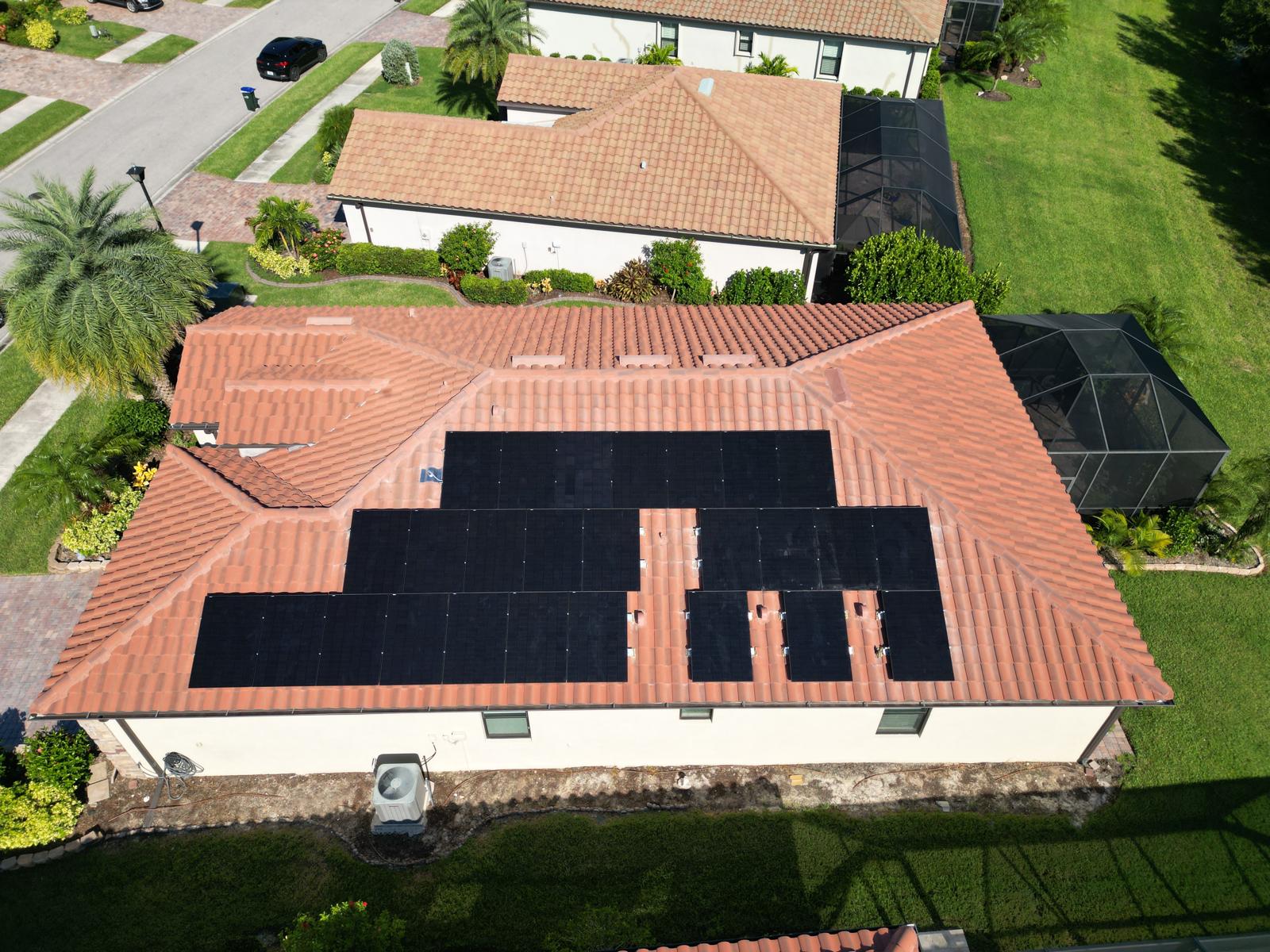
Blue panels are often polycrystalline, but not always. Polycrystalline modules tend to have a more obvious blue color because of the way the silicon crystals form and how light hits the surface. Monocrystalline panels are usually darker, often deep blue or black, because they are made from a single silicon crystal structure.
That said, panel color is not a reliable sign of quality. A dark panel is not automatically stronger, and a bright blue panel is not automatically weaker. Output depends on cell design, wattage, temperature behavior, and how the system fits your roof.
Color Is a Look, Not the Whole Story
If you are comparing panel options, the color should stay in the “nice to know” column, not the “must decide by this” column. The real questions are:
- How much energy will the panel produce on your roof?
- How does it handle heat?
- What does the warranty cover?
- How does it perform in partial shade?
- Will it fit the roof layout without awkward gaps?
This matters even more in Florida, where sun is strong, humidity is no stranger, and roof temps can climb fast. Darker modules can absorb more heat, which is why lighter-colored modules may have a small thermal advantage in hot climates. Still, the right pick comes from actual electrical data and your site conditions, not color alone.
For local homeowners weighing system choices, a good starting point is our solar companies sarasota fl page, which can help frame what to ask before signing anything.
What Matters More Than the Shade of Blue
When homeowners ask why are solar panels blue, they usually want to know whether the color means something about quality. The short answer is no, not by itself. Here is what should matter more than panel color:
Efficiency Ratings
A panel’s efficiency shows how much sunlight it can turn into electricity. Higher efficiency can matter a lot if your roof has limited space.
Temperature Coefficient
This tells you how panel output drops as temperatures rise. In Florida, this is important because hot roofs are part of the deal.
Degradation Rate
Panels slowly lose output over time. A lower degradation rate can mean better long-term production.
Warranty Terms
Look at product warranty and performance warranty. A strong warranty can offer better peace of mind than a pretty panel color ever will.
Shade Handling
Trees, chimneys, vents, and neighboring structures can all affect production. Some systems handle shade better than others.
If you want a broader local cost picture, this guide may help: /blog/solar-installation-sarasota-fl-cost-guide-2026/.
The Florida Angle: Looks Nice, Heat Still Wins Arguments
In a place like Englewood, Sarasota, and much of the Gulf Coast, the roof climate is no joke. Strong sun is great for solar production, but high heat can chip away at panel performance. That is why panel selection should account for real site conditions, not just style points.
A panel that looks sleek on a brochure may not be the right fit for a roof with heavy afternoon shade or limited south-facing space. A slightly lighter-looking module might have a small thermal edge, but what matters most is the measured performance data for your actual roof.
If you are planning a project near the coast, local fit matters just as much as panel appearance. Our team also serves homeowners in the area through /services/solar-panel-installation/ and nearby communities like /areas-served/englewood/.
Reader Poll
Where are you in your planning process?
Final Thoughts
So, why are solar panels blue? Because of the way crystalline silicon interacts with light, plus the anti-reflective coating and surface texture that help the panel absorb more sunlight. The blue color is a visual side effect, not a special paint job or a sign that the panel is “better.”
For homeowners, the smart move is to treat color as a style choice and focus on the parts that affect savings and performance: efficiency, warranty, heat behavior, degradation, shade, and roof layout. If the panel looks good too, great. But your electric bill will care far more about production than color coordination.
Ready to find out what solar saves you?
Get a free custom proposal , system size, projected savings, payback period, and financing options. No obligation, no pressure.
S7 Solar · Venice, FL · Licensed #CVC57136